Royal Literary Fund: Redesigning a Literary Institution for the People It Serves
Challenge & Approach
A Beloved Institution With a Website That Wasn't Working
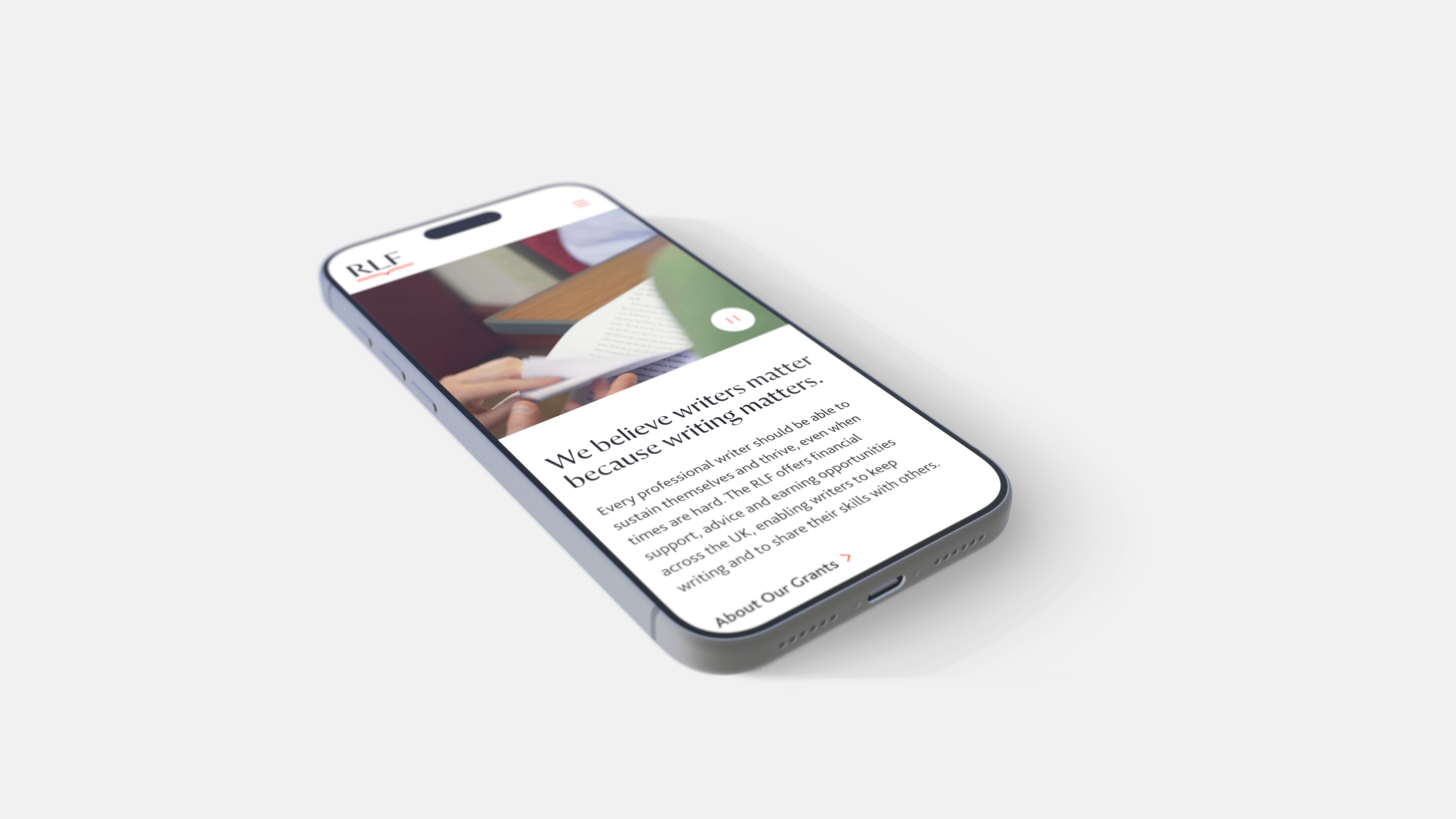
The Royal Literary Fund has supported professional writers for over two centuries — but its website told a different story. Stakeholder interviews surfaced consistent pain points: confusing navigation, information overload, visually outdated presentation, and copy that obscured rather than clarified the grant process. For an organization serving a predominantly older, technology-challenged audience, these weren't minor inconveniences — they were barriers. Discovery started with structured stakeholder surveys and listening sessions across RLF's departments, surfacing five distinct audience personas: grant applicants, potential associates, students, literature enthusiasts, and literary sector professionals. Each had different goals, different pain points, and different paths through the site. Alongside stakeholder synthesis, we conducted peer analysis across comparable organizations — Help Musicians, Arts Council England, the Ford Foundation, and others — to understand how peer institutions handled content hierarchy, grant communication, and accessibility. That research became the foundation for an information architecture that reduced cognitive load, clarified the grant pathway, and gave each audience a legible route through the site.
My Role
Leading Discovery Through to Design
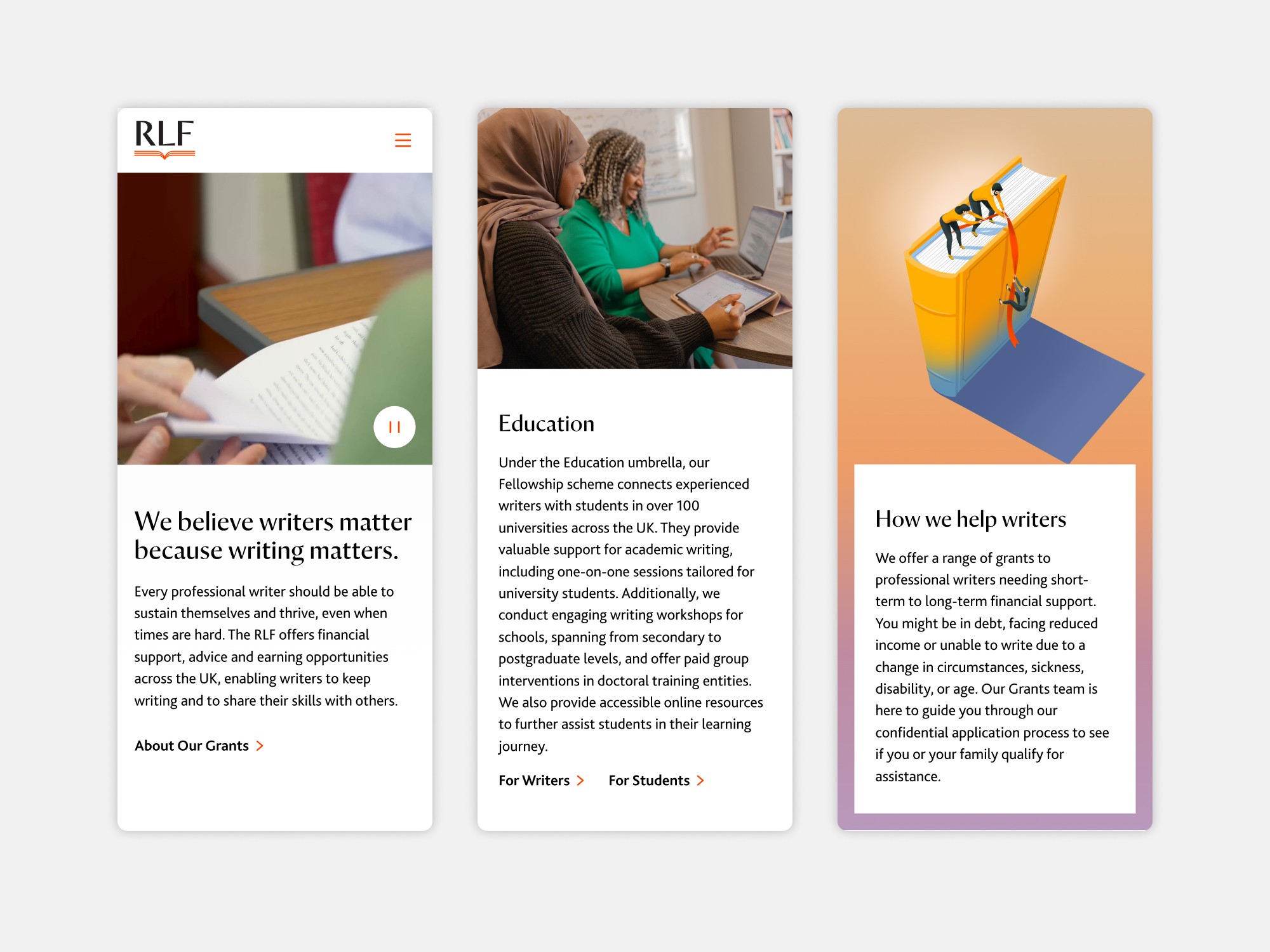
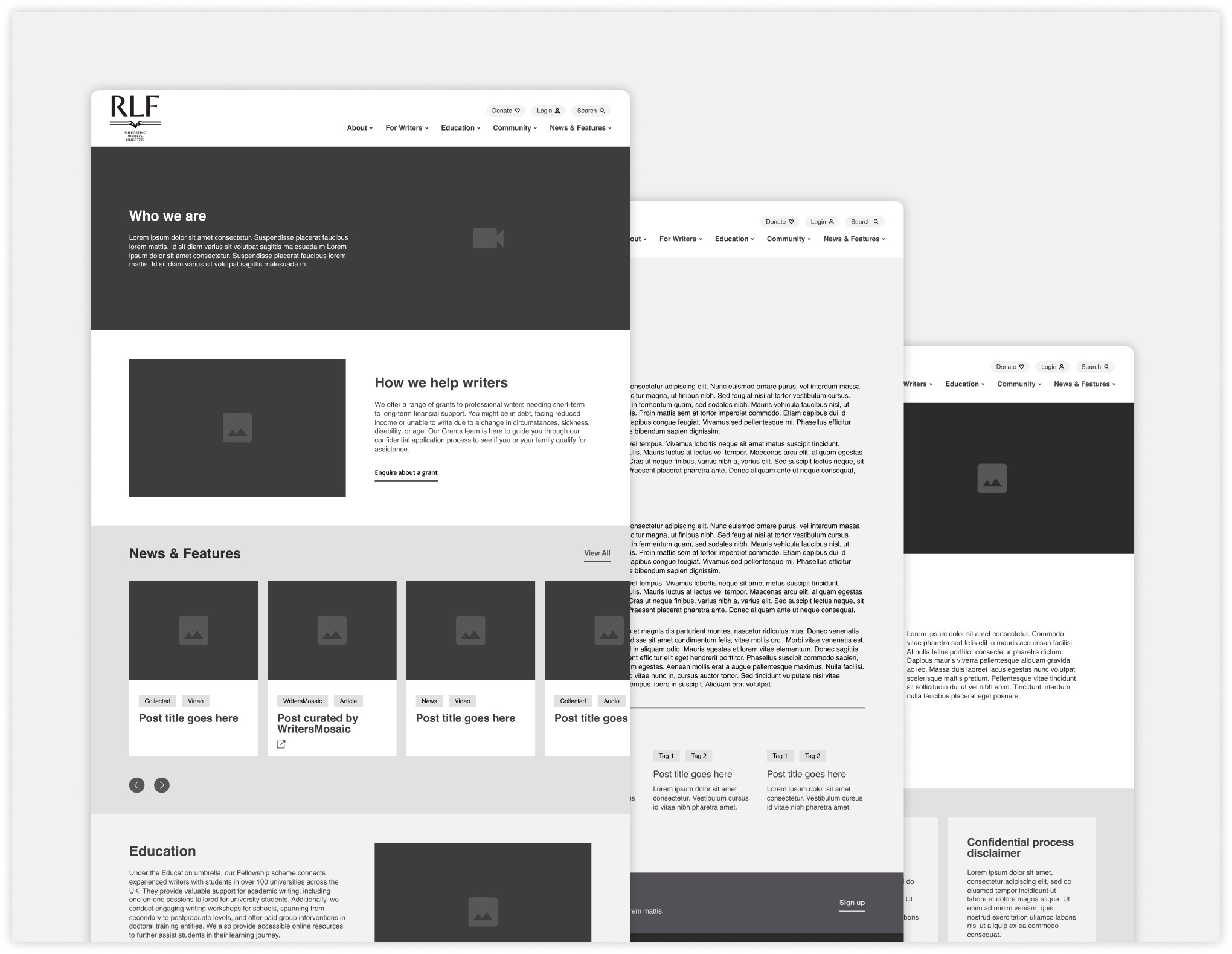
I led the discovery phase end to end — designing and facilitating stakeholder surveys, synthesizing responses across departments, competitor analysis, and defining audience personas. From there I translated the research into UX architecture and wireframes before moving into visual design. I supervised a freelance designer who supported production throughout the engagement, maintaining design consistency across a large and complex site.
Results
Research-Led, Built for the Long Term
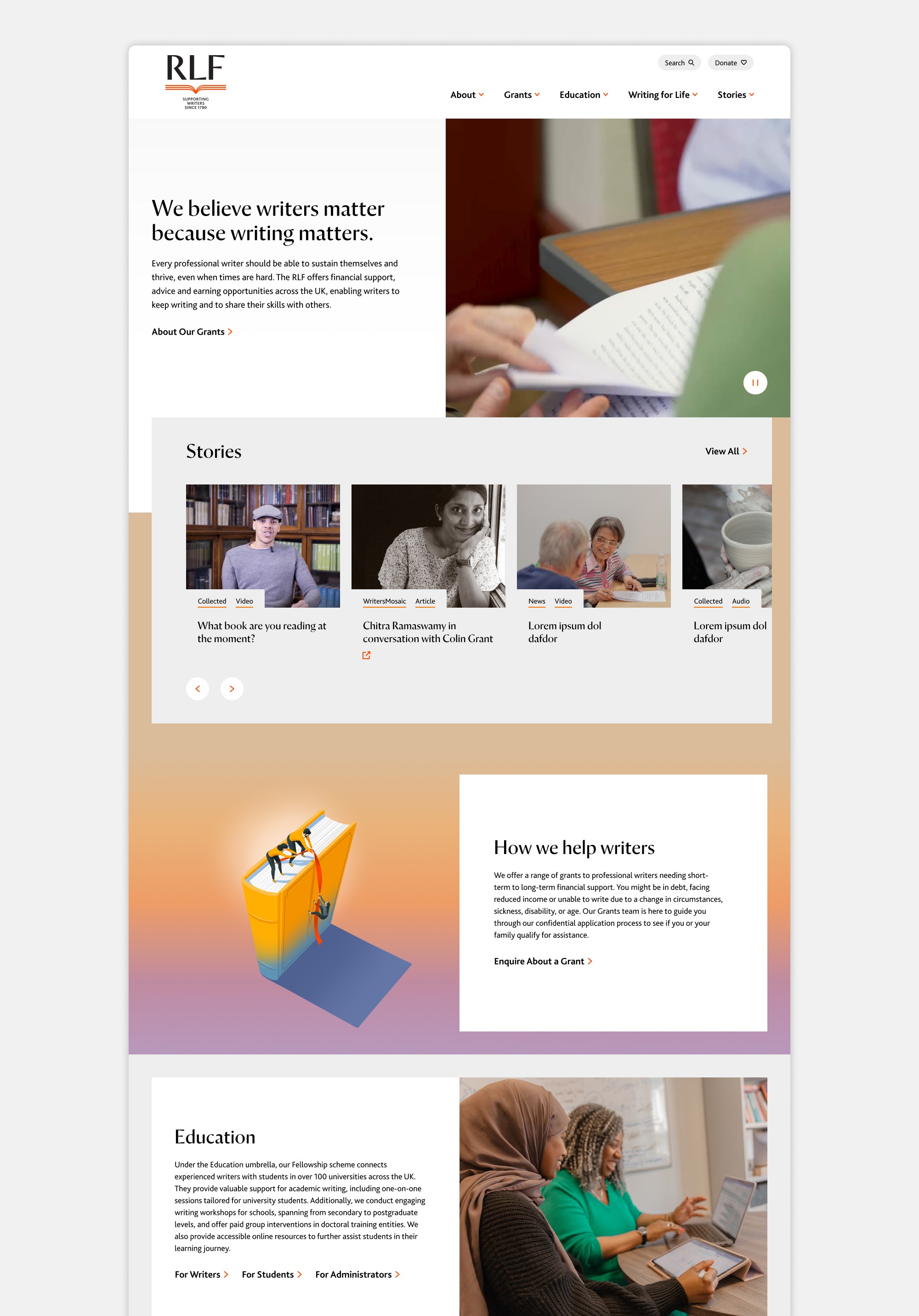
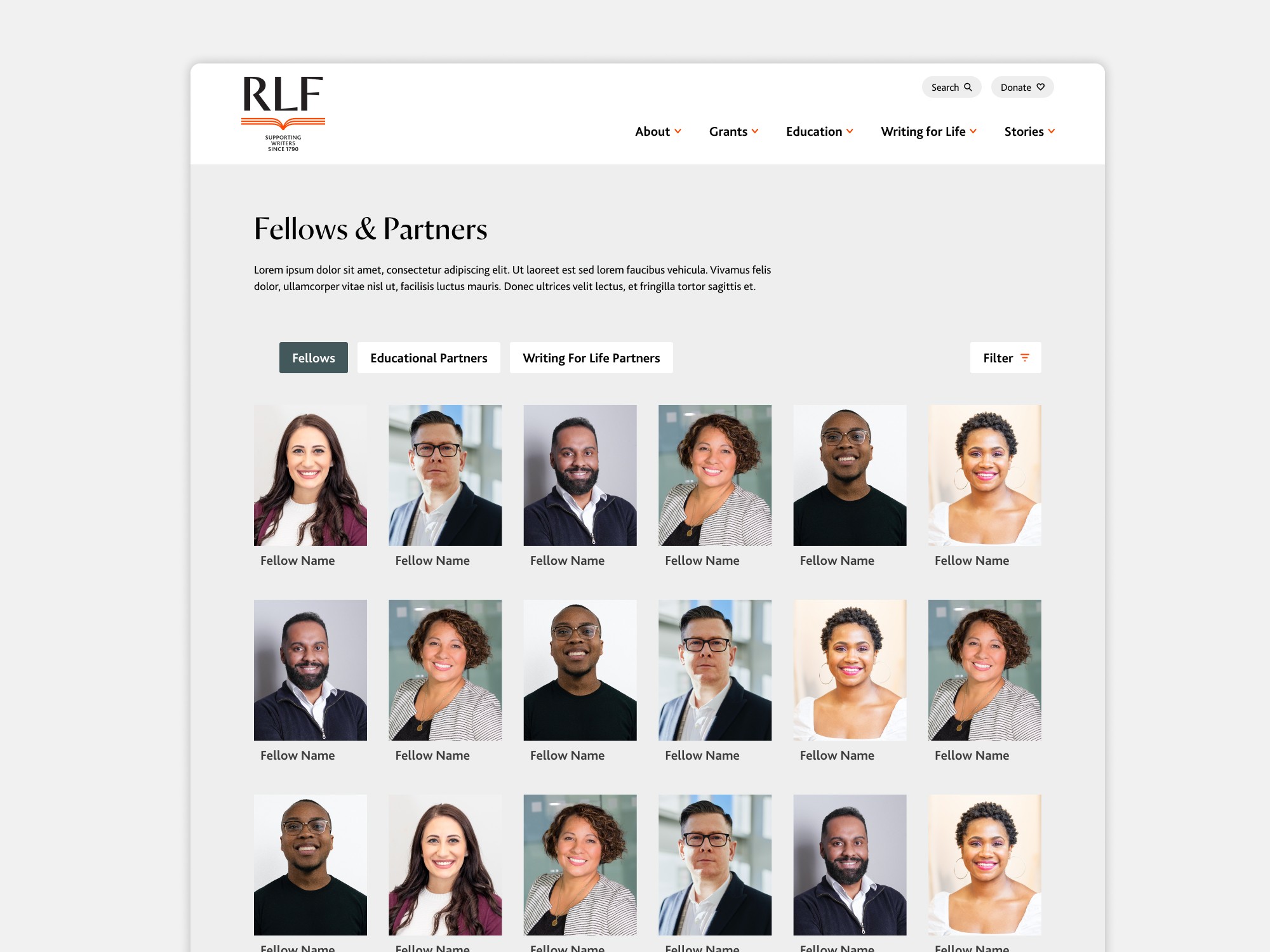
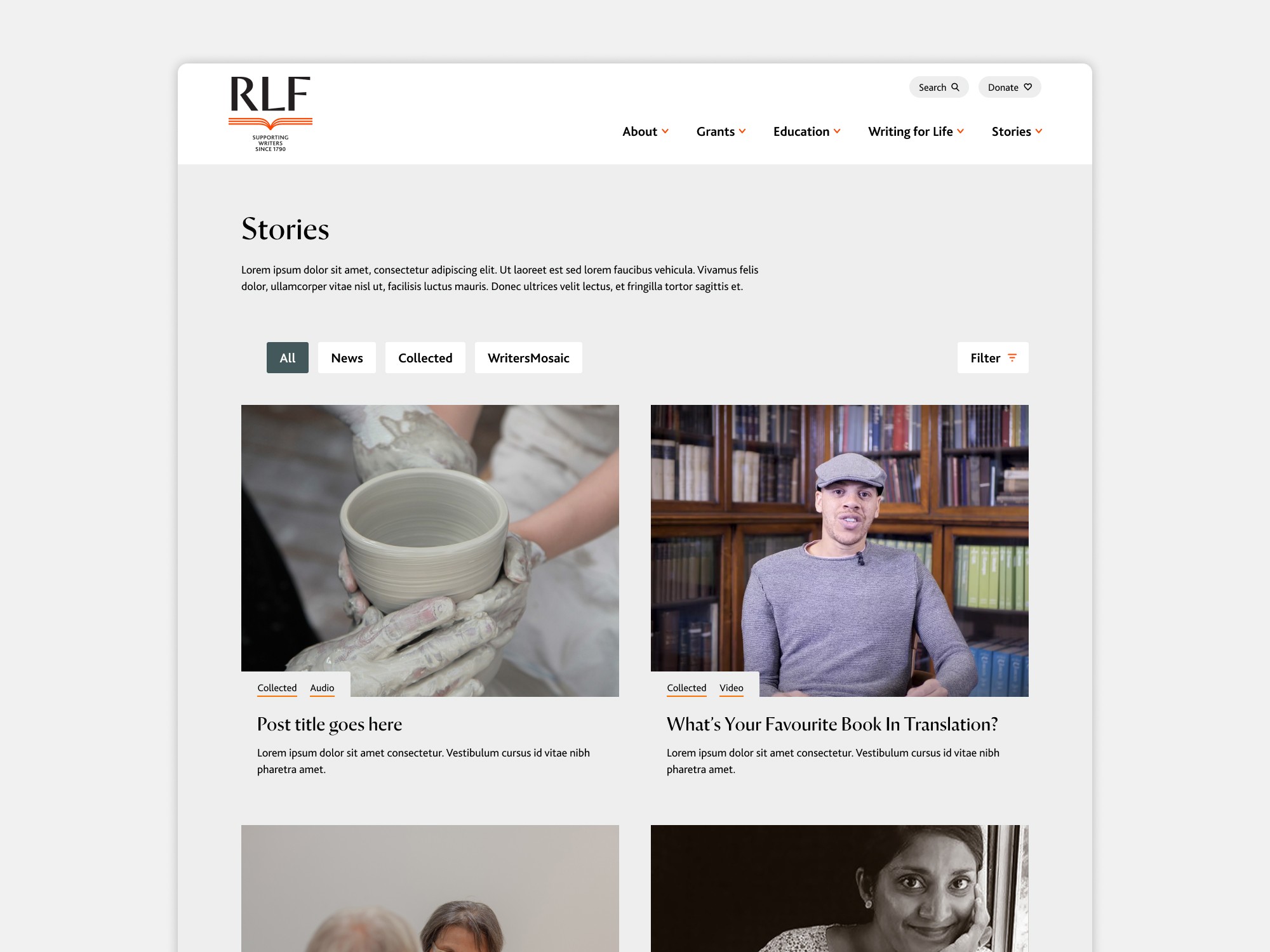
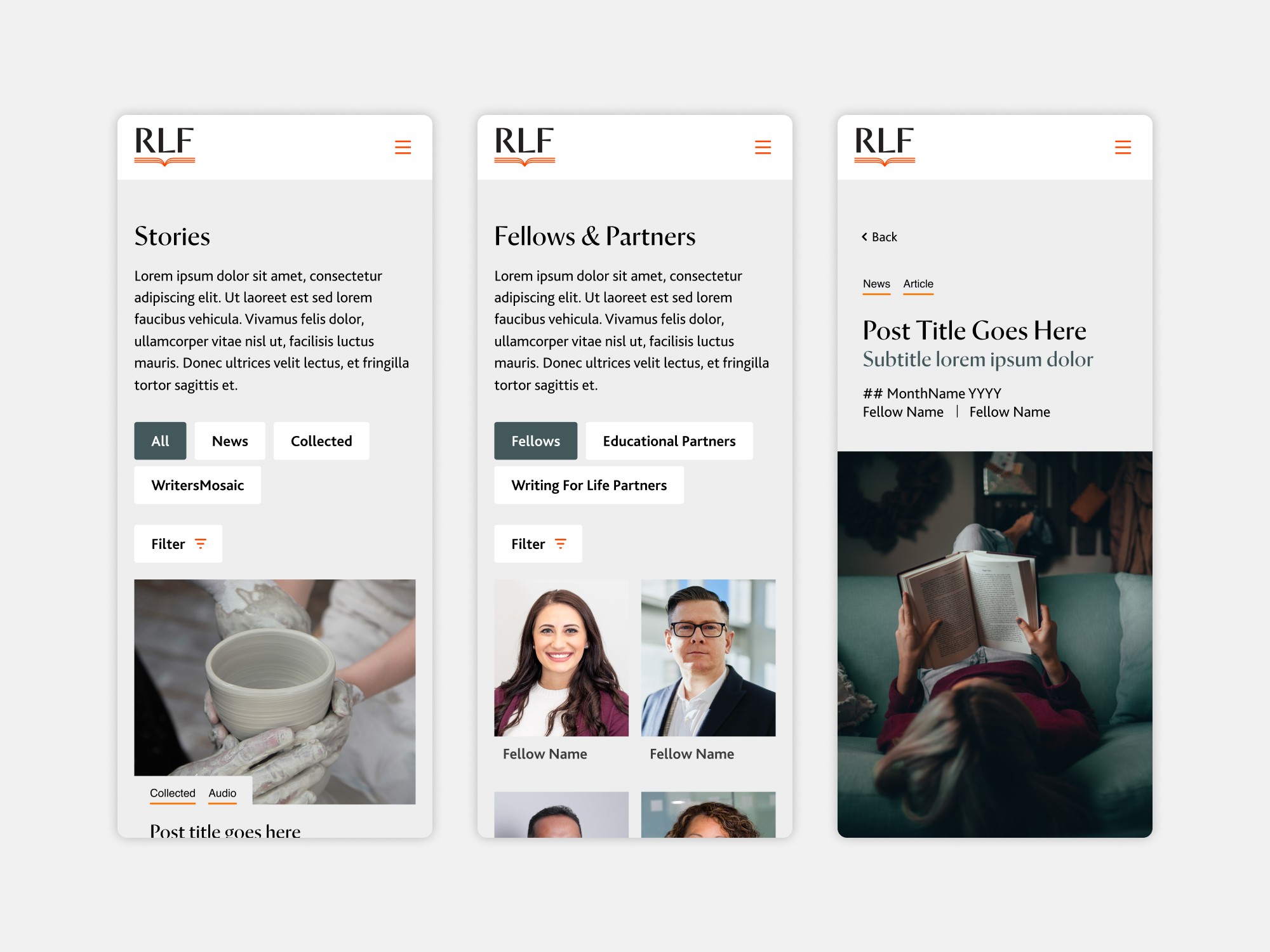
The redesign gave RLF a site architecture built around the needs of its actual users — not its internal org structure. Clear grant pathways, accessible navigation, and a cohesive visual system replaced a site that stakeholders described as opaque, outdated, and hard to navigate. The project delivered a design system that gives RLF's team the tools to maintain and grow the site without starting from scratch each time.